10 Weeks With the OPEX Method: What I Actually Learned (Systems That Stick)
This blog series will document the 10 week experience of Dr. David Skolnik as he goes through the OPEX Method Mentorship. Follow along as we add to this blog each week.
Coaching & Business Systems That Stick
Ten weeks goes fast when every session gives you something you can use the same day. That was my biggest takeaway from the OPEX Method mentorship, not just more knowledge, but clearer ways to apply what you already know.
This experience also reminded me of something I’ve come to believe more and more as a coach: confidence tends to follow competence. When you build real skill, your voice gets steadier, your calls get cleaner, and your coaching gets calmer.
The educators made the difference (and it showed)
Before getting into week 10, the biggest shoutout belongs to the OPEX educators and mentors. This didn’t feel like a typical “education team runs a course” setup. The people leading the program are also people running the company and shaping the brand.
For the first eight weeks, we learned with Carl, the CEO of OPEX. That matters. When someone at that level takes time to teach coaches week after week, it sends a clear message about what the company values.
Then the final two weeks shifted into marketing and sales for fitness professionals, led by Kandace, OPEX’s CMO. She’s been in marketing leadership roles with well-known fitness brands for more than two decades, and you could feel that experience in how practical the resources were. Not just ideas, but tools you can actually put into your business.
If you’re curious about the mentorship itself, OPEX outlines it here: OPEX Method mentorship details.
Why “confidence follows competence” kept coming up
In coaching (and honestly in most careers), confidence doesn’t come from hype. It comes from knowing what you’re doing and being able to repeat it under pressure.
Competence also keeps moving. The more you learn, the more you notice what you don’t know yet. That can feel discouraging if you expect to “finish” learning. Or it can feel like a challenge you’re excited to take on.
This program leaned into that second path. It wasn’t built to make you feel like you finally arrived. It was built to help you keep building, with better structure and better language.
The cohort model solved a problem most courses ignore
A lot of coaches (and physical therapists) have the same experience with “learn at your own pace” courses:
You plan to start next week.
Next week turns into next month.
A year later, you remember you bought it, and you can’t find your login.
The OPEX Method format helped because it wasn’t passive. It was a small-group cohort with live weekly sessions. You show up, or people notice you didn’t. You can’t hide behind a muted mic and a camera-off square forever. If you’re always leaving early, it stands out.
That external accountability matters. So does the community side of it, being in ongoing conversation with other coaches who are working on the same problems you are.
And the best part is you still get the library of pre-recorded material afterward. The live sessions pushed consistent action, and the recorded content means you can keep learning at your own pace once the habits are built.
Week 10: marketing and sales without the “icky” feeling
Week 10 was focused on marketing and sales, and the goal wasn’t to turn coaches into influencers. It was to build a simple system that creates demand and guides people toward a decision.
Candace called it the Minimal Viable Marketing system (MVM). The idea is straightforward:
Turn what you share publicly into demand.
Take that demand and guide it toward decisions from prospective clients.
A line that stuck with me was the concept of teaching publicly so you can sell privately. When your public message is clear and consistent, the sales conversation feels less like a push. The prospect often shows up already understanding what you do and why it matters.
If your messaging is weak, sales feels awkward. You end up forcing the conversation because nothing you’ve shared has built clarity or trust. Strong messaging changes that. It creates a sense that the person reaching out has already been “sold” through the way you show your work, your coaching style, and the results you help people earn.
A content system you can actually maintain
A big part of the marketing discussion was content structure, especially for coaches who live in short-form content because it’s realistic and repeatable.
The approach was not “post more.” It was “post with a plan.”
Short-form content anchored to long-form
One practical structure we talked about was anchoring your short-form content to one weekly long-form piece. That way, your Instagram posts (or similar) aren’t random. They support a bigger idea and drive people to a deeper explanation.
For me, YouTube has always felt like a lot. Where do you start? Are videos just longer versions of short posts? And how do you stay consistent when the whole reason you can post often is because posts are short?
The answer we worked through was creating a small “hub” of longer videos that cover your core topics, then using short clips to support those videos over time. You’re not trying to reinvent your message every day. You’re reinforcing it.
Using a custom GPT to plan five anchor videos
In week nine (which fed directly into the week 10 content plan), Candace shared a custom-built GPT designed to help create five anchor YouTube videos. The point wasn’t the tech itself. It was the structure.
Five strong “pillar” topics give you a foundation you can build on for months. It’s easier to stay consistent when you aren’t guessing what to talk about every week.
The main theme of the OPEX Method: systems and frameworks
If there was one repeat theme across coaching, training, intake, and marketing, it was systems and frameworks.
Not because coaching should feel robotic, but because structure creates freedom.
When your foundation is practiced and specific, you can relax in the moment. You can pay attention to the human in front of you instead of running mental checklists the whole session.
That applies to almost everything a coach does:
Aerobic development
Strength and hypertrophy planning
Intake and assessment
Program design
Content strategy
Sales conversations
Client check-ins
The goal is to build repeatable processes, so you can “flow” when it’s time to coach live.
“Planned spontaneity” is real (and it shows up in coaching)
This idea came up in a client conversation right as I was finishing the program. Most of the work we do as coaches happens between sessions, not during them.
That behind-the-scenes work includes things like:
Reviewing consult calls
Looking over intake results
Building a 1 to 2-year macro plan
Breaking that plan into seasons (mesocycles), blocks, weeks, and sessions
It also shows up in business planning:
What’s my 1 to 2-year goal?
What are my quarterly goals?
What actions support those goals this month?
What needs to happen this week?
What piece of content do I publish today that fits the big picture?
At first, that can sound like over-planning. But it’s similar to real life. Schedules get busy, and if you don’t plan free time, you usually don’t get it. In coaching, if you don’t plan your systems, you don’t get presence. You get distraction.
Without a structure you trust, your brain is stuck trying to predict every possible turn:
What’s the next exercise? What patterns did we hit today? Will they be too sore tomorrow? What if they ask to talk to their spouse? What if they question price?
If you already know how you handle those moments, you stay present. If you don’t, you spend the session half in the future and half in the past, and you miss what’s happening right now.
Why experienced coaches still learn a lot in programs like this
A fair question came up after I wrapped the ten weeks: “Did you actually learn much? Haven’t you heard most of this already?”
That hasn’t been my experience. Even when the topic is familiar, a new perspective can change what you notice. The same concept can look different when it’s explained by another coach, another business owner, or another educator who has solved similar problems in a different way.
Collecting those perspectives helps you clarify your own vision and your own language. It also helps you communicate with more types of clients, and even collaborate with more types of coaches.
If you want resources to keep building
OPEX also has free materials that support coaches outside the mentorship. If you’re the type who likes tools you can apply right away, these are worth saving: free coaching guides from OPEX. There are also additional resources available through CoachRx here: free CoachRx coaching resources.
Conclusion
The biggest lesson from ten weeks was simple: strong coaching gets easier when you build systems you can repeat. Marketing feels better when your message does the heavy lifting, and sessions feel better when you’re not mentally scrambling. The OPEX Method delivered frameworks for training, business, and communication, and that structure created more calm, not more work. If you’re serious about getting better as a coach, this kind of guided learning is hard to replace.
Next Steps
Become A Professional Coach.
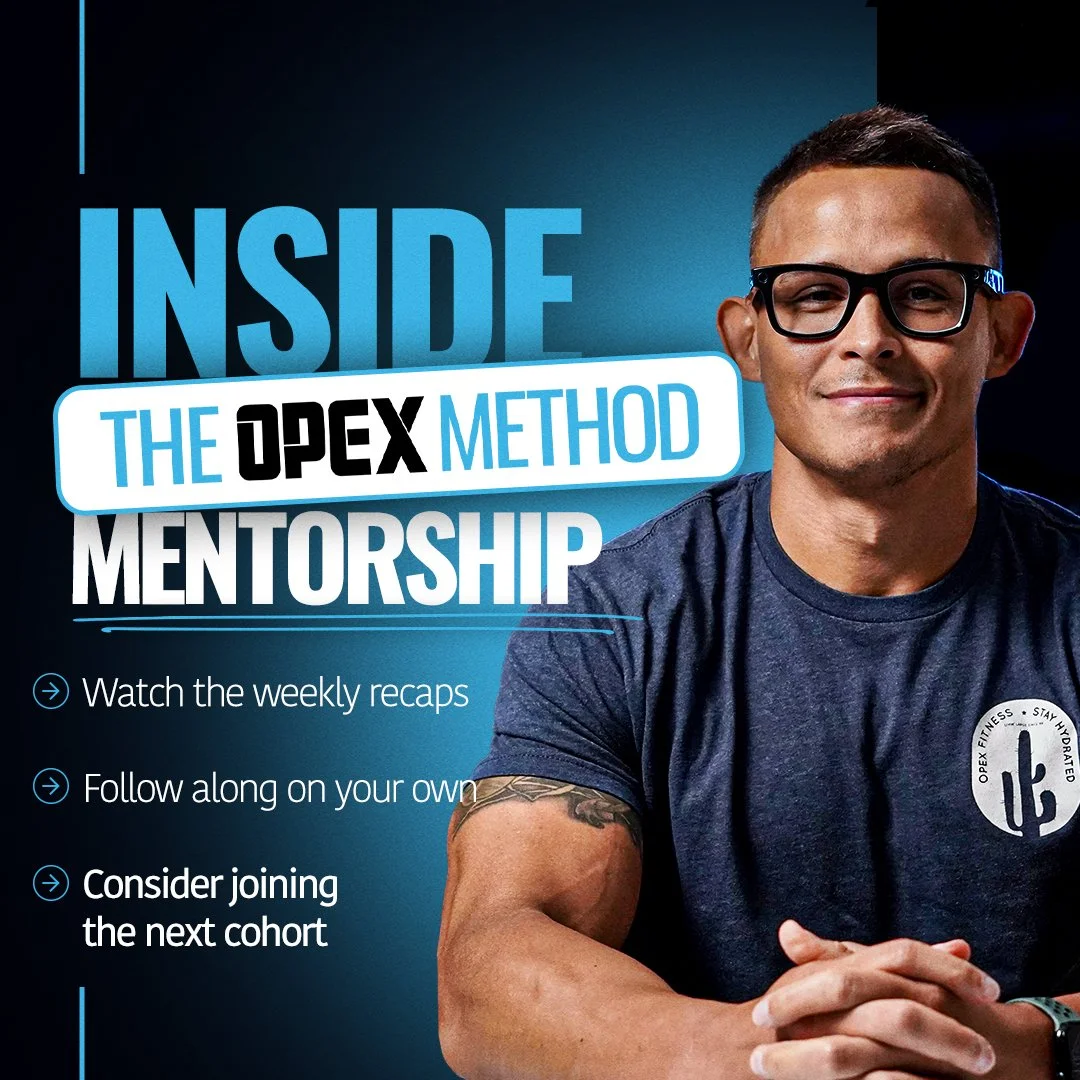
Wherever you are on your coaching journey, learn a repeatable and proven system to simplify program design and build a sustainable career. See how the OPEX Method Mentorship can help you find your version of success as a professional coach.
Elevate Your Coaching Business
CoachRx empowers fitness coaches to excel in program design, nurture client relationships, and scale their businesses with unparalleled efficiency and insight. Discover why CoachRx is the preferred choice for fitness coaches seeking to differentiate and deliver exceptional services.
Continue To Learn & Grow
Whether you want to write better training programs, increase your knowledge of nutrition & lifestyle protocols, or work on your coaching business, LearnRx has got you covered with courses, playlists, tools, and resources on demand. New content added monthly.